
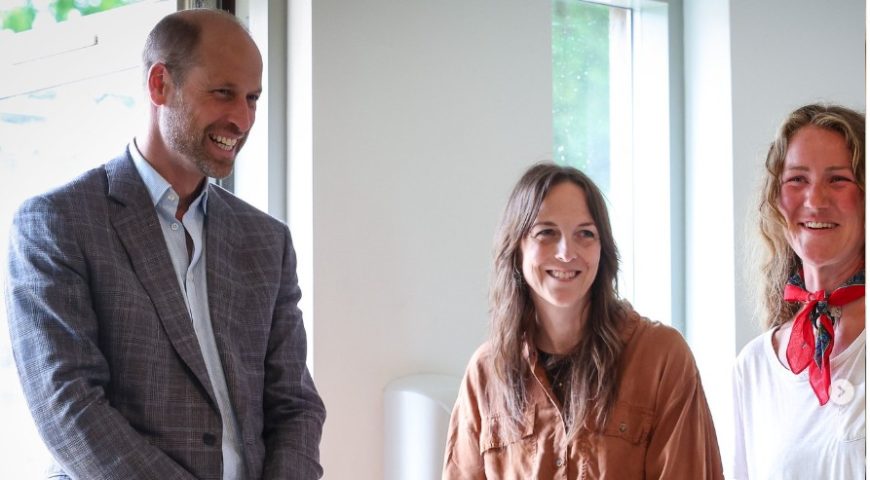
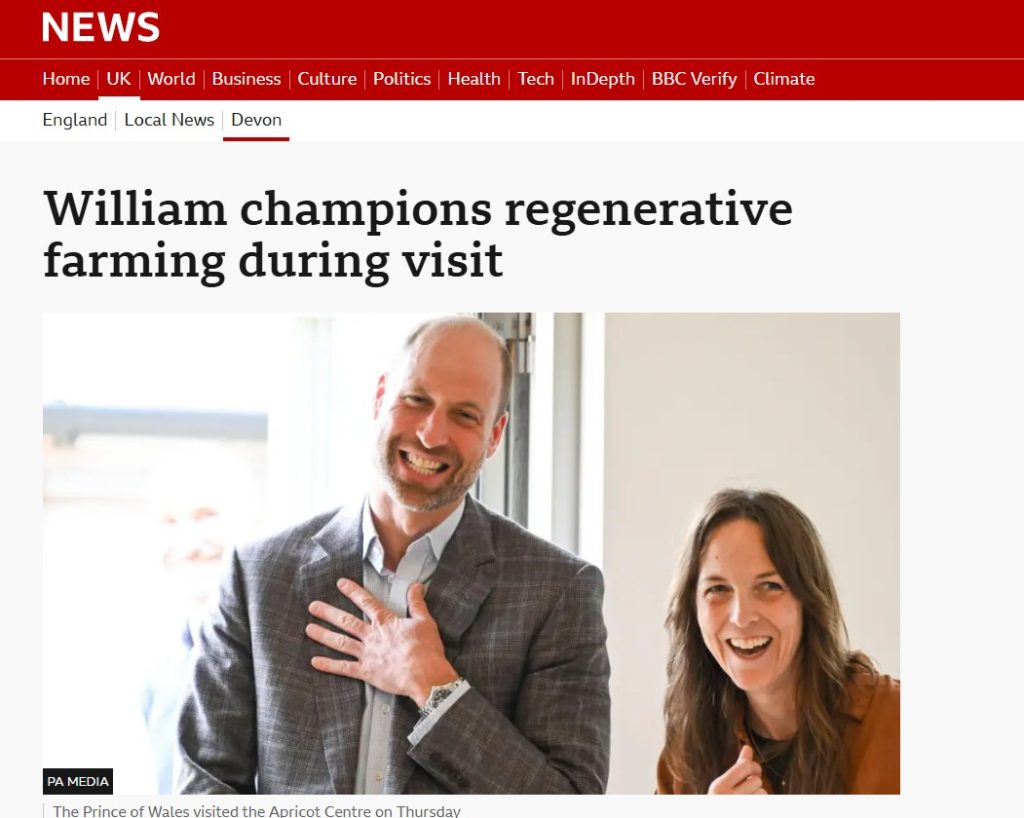
We were delighted to see Prince William, The Prince of Wales, visit The Apricot Centre, in Devon, to learn more about the role regenerative farming can play in supporting both nature and community wellbeing.
The Apricot Centre, a Biodynamic Land Trust farm tenancy, has become a leading example of how land can be managed in ways that benefit people, wildlife and the wider environment. Established in 2015 on a former dairy farm, the biodynamic farm combines organic and regenerative farming practices, including agroforestry, permaculture and rotational grazing, with education, training and wellbeing programmes.
During his visit, Prince William met farmers, staff, students and members of the local community to explore how regenerative farming systems can produce nutritious food while enhancing biodiversity and reducing reliance on chemical inputs. He also discussed the challenges facing farmers and the importance of creating financially viable models that support both people and the land.
The Prince showed particular interest in the centre’s training programmes, which support people entering farming and those transitioning to regenerative agricultural practices. Each year, around 300 students participate in courses and learning opportunities at the farm.
The Apricot Centre has demonstrated that environmental and social outcomes can go hand in hand. Alongside achieving an annual turnover of £1.3 million, the farm reports that it has become carbon neutral and increased biodiversity across the site by 400 per cent.
A key focus of the visit was the connection between farming, nature and wellbeing. The centre delivers a range of nature-based therapeutic programmes and support services for children, young people, families and farming communities. These initiatives recognise the growing evidence that spending time in nature can reduce stress and anxiety while supporting mental, emotional and social wellbeing.
Staff also highlighted the challenges faced by many within the farming sector, including isolation and mental health pressures. The Apricot Centre’s wellbeing programmes provide support not only for individual farmers but also for families and wider rural communities.
We are very proud to support a farm like the Apricot Centre that demonstrates how secure access to land can enable innovative, nature-friendly farming to flourish. The visit provided valuable recognition of the important work being undertaken at the farm and highlighted the growing national interest in regenerative approaches that restore ecosystems, support livelihoods and improve wellbeing.
We congratulate the entire Apricot Centre team for sharing their work so effectively and for continuing to demonstrate what is possible when farming, education, health and nature are brought together in one thriving landscape – a fantastic example of the difference that biodynamic farming can make.
Published by