
…with Skilled Workers for a Horticultural Revolution in the UK
The government food strategy has three overarching objectives a) a thriving agrifood sector that delivers a consistent supply of food and secures jobs, b) a food system that delivers for nature and in turn produces high quality food that is affordable and accessible, and c) a trading system that increases opportunities in exports and imports, all whilst ensuring regulatory standards across domestic products are not undermined. UK-grown vegetables make up 55–60% of supply, with the remaining 40-45% of vegetables consumed in the UK coming from imports[1]. UK horticultural land is only a fraction of total agricultural land, with great potential to expand production and reduce import reliance by bringing small plots of suitable land into horticultural use.
While the Government Food Strategy focuses heavily on industrial horticulture giving investment attention to multi-acre glasshouses, vertical farms, and high-tech controlled environments, there’s a parallel opportunity being overlooked: small-scale, agroecological farms that serve local communities and strengthen our national food network from the ground up. This is where the BD Land Trust is active and can help.
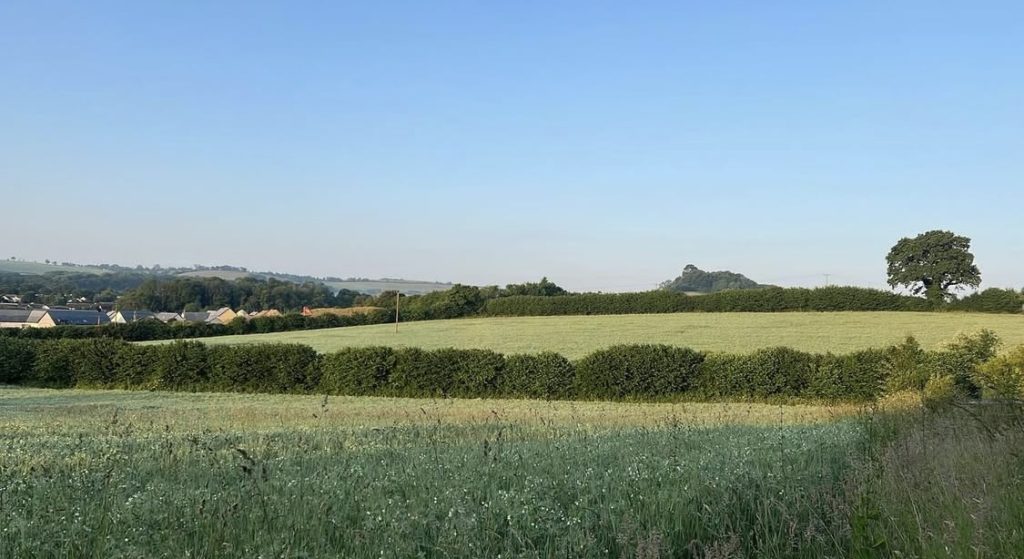
The first step is simple but essential: identify land that can be rented or acquired at reasonable prices. There’s more of it than you might think, sometimes regarded as idle or under-productive plots that could be brought back into use with the right vision. The ‘church’ is a classic example of a potential landholder that could open up space for local growers. By repurposing such land, we can transform dormant fields into thriving sources of fresh vegetables, fruit, and horticultural products. The Apricot Centre is one of the first examples in the country, where the 20 acres of Glebe Fields are rented from the local Diocese, and now make 8 hectares of the Huxhams’ Cross thriving market garden and animal grazing fields.
Of course, land alone does not feed people, we need an active, skilled, confident and willing workforce of growers. The second step is finding those ready to take on the challenge – workers and entrepreneurs who want to take over plots of land and have the professional skills and confidence to succeed. This ‘people gap’ is as critical as the current ‘land gap’. Targeted training, mentorship and support is critical – The Apricot Centre is a blueprint with a multi-level agroecological training programme[2] that we advocate for.
The critical gap in the government food strategy that needs to be addressed is the social capital of investing in a workforce that creates resilient social, cultural and environmental networks within local economies between growers, local residents and smaller businesses working within an agroecological remit. Small farms can collaborate, share equipment, knowledge, and even marketing channels, form networks that are stronger than any single enterprise. We would also like the government to invest public money into supporting a GIS map of land attached to networks such as the Diocese or plots of land left idle of neglected that could be purchased for reasonable prices, where networks of individuals and organisations such as, can develop share offers.
The vision is clear:
- Identify idle or under-used land.
- Secure it at fair and reasonable rates.
- Match it with skilled, motivated farmers.
- Support them with training, and mentorship within local networks.
The Biodynamic Land Trust, Association and College can help with those steps. We can create a patchwork of small farms that together form a resilient, productive, and sustainable food system. It’s a model that feeds people, empowers communities, and brings life back to neglected land and rural areas that have untapped potential socially and environmentally – often found in small villages or towns such as the Glebe Fields rented by the Apricot Centre.
If you are interested in land or any of the 4 points above do contact the BD Land Trust on info@biodynamiclandtrust.org.uk.
Amber Lawes Johnson
[1] https://www.wwf.org.uk/sites/default/files/2023-09/The-future-of-UK-vegetable-production.pdf
[2] https://www.apricotcentre.co.uk/education-1